South Florida Water Management & Irrigation: Building Smarter Systems for a Changing Climate
South Florida Water Management & Irrigation: Building Smarter Systems for a Changing Climate
Feb 15, 2026
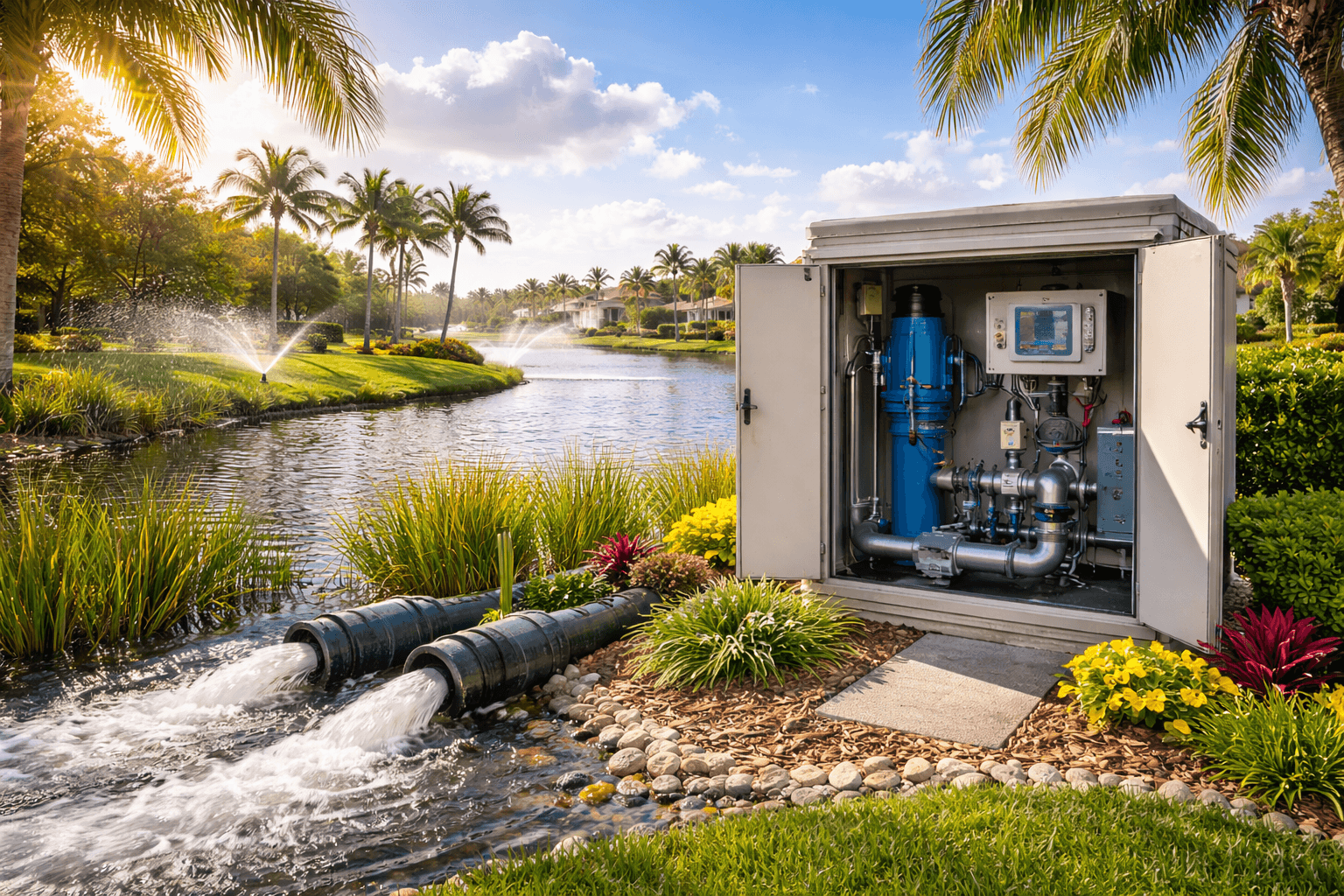
South Florida water management is no longer just about keeping landscapes green. It is about protecting natural resources, complying with strict regulations, and designing irrigation systems that can withstand extreme weather patterns. From prolonged droughts and high heat to sudden tropical storms and hurricanes, irrigation systems across South Florida must be engineered to handle constant climate variability.
For property owners, municipalities, HOAs, and commercial developers, the cost of getting this wrong is significant. Poorly designed or outdated irrigation systems lead to turf loss, recurring repair bills, regulatory fines, and millions of gallons of wasted water every year.
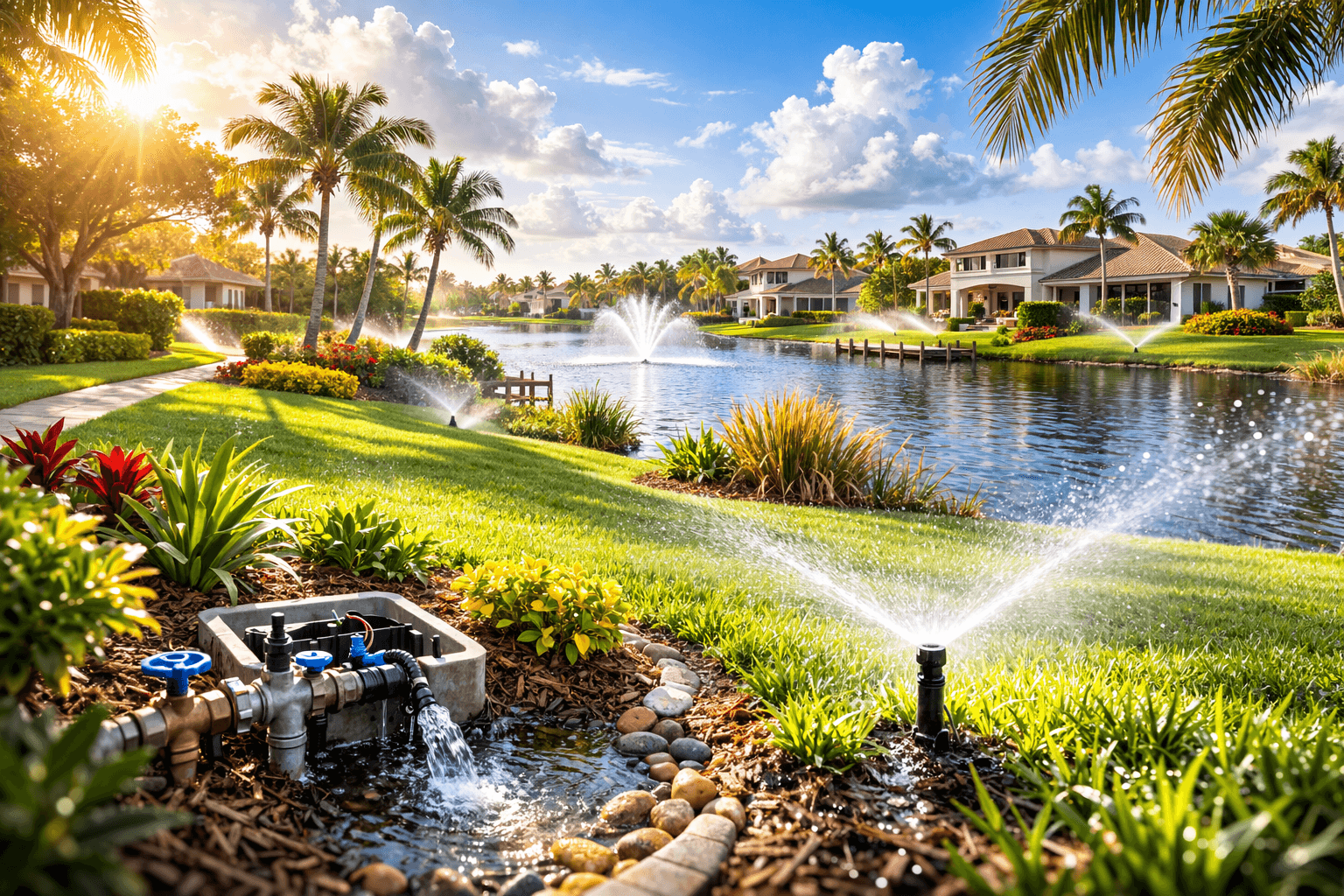
South Florida’s Climate Demands Adaptive Irrigation Systems
South Florida’s weather patterns are unpredictable and increasingly extreme. Irrigation systems must perform during:
Extended periods of heat and minimal rainfall
Sudden heavy rain events from tropical storms or hurricanes
Seasonal drought conditions
Rapid fluctuations in soil saturation
An irrigation system that cannot adapt to these swings will either overwater or underwater landscapes. Overwatering wastes water and increases runoff, while underwatering leads to stressed turf, plant loss, and costly replacements.
Smart irrigation design in South Florida must include:
Rain and soil moisture sensors
Zoned irrigation controls
Variable frequency drive (VFD) pump systems
Real-time monitoring and automation
Proper drainage integration
Without these components, irrigation infrastructure will struggle to maintain performance under Florida’s demanding climate conditions.
The Real Cost of Inefficient Irrigation
Across South Florida, we frequently see properties spending tens or even hundreds of thousands of dollars annually replacing turf due to system failure or poor configuration. In addition to landscape damage, inefficient systems result in:
Increased pump wear and mechanical failure
Escalating energy costs
Excessive water usage
Repeated short-term repair work instead of long-term solutions
Beyond financial losses, inefficient irrigation contributes to unnecessary strain on Florida’s aquifers and freshwater systems.
Understanding South Florida Water Regulations
Water use in South Florida is carefully regulated to protect regional water supplies. The South Florida Water Management District oversees water resources across much of the region, balancing flood protection, water supply, and environmental preservation.
The Southwest Florida Water Management District and the St. Johns River Water Management District perform similar roles in their respective jurisdictions.
These Water Management Districts establish:
Minimum flows and minimum water levels
Water use permitting requirements
Irrigation restrictions for residential and commercial properties
Monitoring systems for lakes, aquifers, and rivers
For example, many South Florida communities operate under two-day or three-day per week watering restrictions. Lawn irrigation schedules are often determined by property address numbering. Violating these regulations can lead to penalties, but more importantly, non-compliance signals that a system is not optimized for efficiency.
Designing Irrigation Systems for Compliance and Performance
An irrigation system in South Florida must be designed with three priorities in mind:
Climate resilience
Regulatory compliance
Long-term operational efficiency
This requires more than simply installing pumps and sprinklers. Large-scale developments often require:
Water movement between multiple water sources
Pressure balancing across expansive landscapes
Automation that adjusts output based on rainfall and soil data
Engineering that accounts for both drought and flood scenarios
Failing to account for these variables results in systems that underperform and require constant intervention.
The Future of South Florida Water Infrastructure
As climate patterns continue to shift and water regulations become more stringent, the demand for intelligent irrigation and pumping solutions will only increase. Sustainable water use is not optional. It is essential for preserving property value, protecting the environment, and ensuring regulatory compliance.
Investing in modern, responsive irrigation systems is no longer just about aesthetics. It is about responsible South Florida water management and building infrastructure that is engineered to last.
If your property is experiencing recurring irrigation failures, escalating water bills, or compliance concerns, it may be time to evaluate whether your current system is truly built for South Florida’s climate realities.